Loose or unsafe railings
Reinforce or rebuild guard sections, replace wobbly posts, correct attachment points, and address rot where rails meet decking or rim boards.
Deck repair · Atlanta, Georgia
Get a clear inspection, a written scope, and repairs that make your deck safer underfoot and stronger at the rails.
Inspection-led restoration
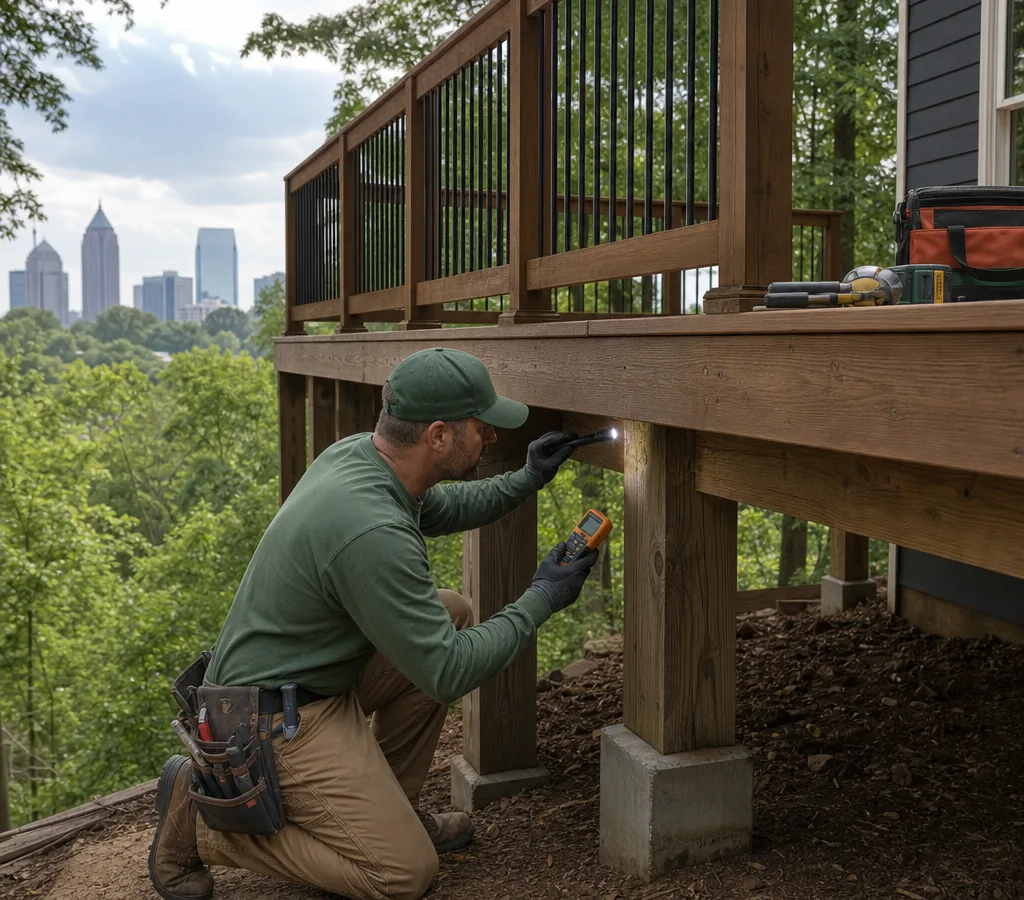
If your deck needs repair, you are probably seeing the red flags we get called about most often: bouncy boards, soft spots, loose railings, fasteners backing out, and stair treads that feel slick or unstable. Live in Marietta? See our Marietta deck repair page.
In Atlanta's humid summers and frequent rain, water finds its way into end grain, around ledger connections, and into the bottoms of posts. Once moisture stays trapped, rot and corrosion speed up and small issues turn into structural ones. Our job is to find the real cause, not just replace the loudest board.
Deck Contractor Atlanta handles deck repairs that range from targeted safety fixes to full deck restoration work. The goal is the same: give you a deck that feels solid, drains and dries the way it should, and meets today's basic safety expectations for guard height, attachment, and stair stability.
Structure before surface
A good repair plan starts with the connections and framing, then moves up to the walking surface.
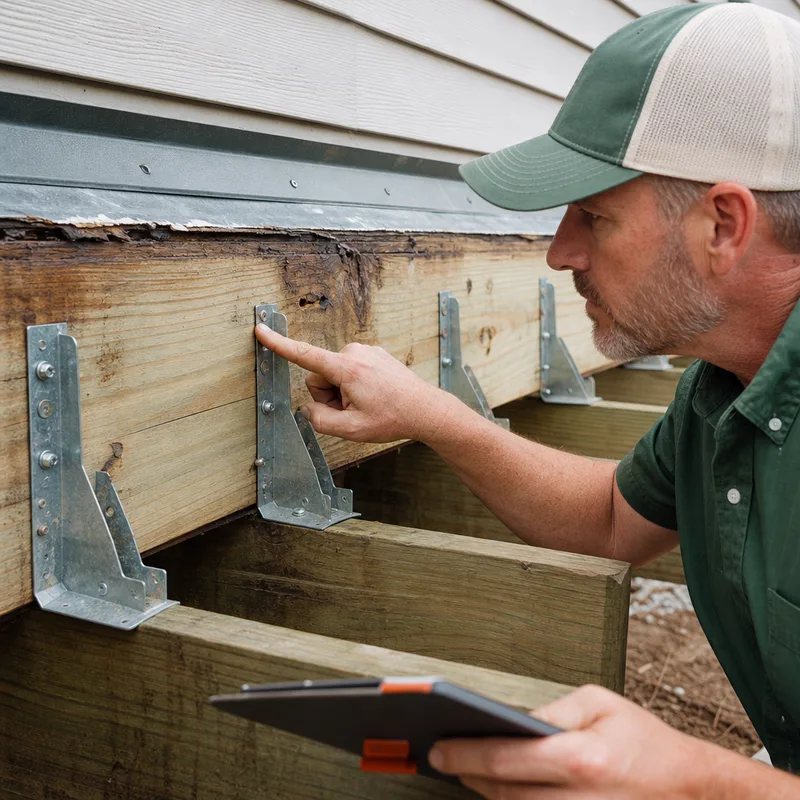
We typically begin at the ledger board where the deck meets the house, looking for proper flashing, signs of water intrusion, and secure attachment. Then we move to joists and beams to check for rot at ends, splitting around fasteners, sagging, and improper spans. Posts and footings get special attention because post bases can stay wet and decay can hide at grade.
Only after the structure checks out do we treat boards, stairs, and rails as finish components. If you replace surface boards without fixing a wet ledger detail or a failing post, the deck will feel better for a short time and then the same problems return.
If you are choosing between contractors, any contractor should be willing to walk you through what they found, what is truly structural, and what is optional cosmetic improvement. As a full-service Atlanta deck company, we do that before quoting any repair.
Targeted repair options
Reinforce or rebuild guard sections, replace wobbly posts, correct attachment points, and address rot where rails meet decking or rim boards.
Swap damaged boards, correct fastener patterns, and fix drainage and airflow issues so replacement boards last longer.
Repair joists, beams, and rim boards; add blocking where needed; and correct localized sagging when the structure is sound enough to repair.
Replace failing treads, stringer sections, and handrails, and address slick surfaces that turn into fall risks after rain.
Remove decayed sections, replace with like-for-like pressure-treated lumber where appropriate, and correct the moisture path that caused the damage.
Upgrade rusted connectors and fasteners with exterior-rated options suited to treated lumber, then tighten and re-secure problem areas.
Atlanta property conditions
Deck problems show up differently across Atlanta because exposure and build era matter.
In older intown neighborhoods like Grant Park and Virginia-Highland, we often see decks that have been through multiple board swaps over the years. The surface may look newer while hidden framing is original and tired, so we pay extra attention to joist ends, rim boards, and railing post attachment.
In heavily shaded areas like parts of Buckhead with mature tree cover, decks can stay damp longer after rain. That lingering moisture can accelerate rot in board ends and encourage slippery growth on stairs and landings. Repairs in these conditions often include improving drainage gaps, airflow, and replacing any wood that is already punky.
On hills and lots with grade changes, common in areas like Morningside and around many ravine lots, posts and stair structures take more stress. We check post plumb, bracing, and stair stringer support carefully because small movement shows up as squeaks and wobble.
No matter the neighborhood, the safest approach is the same: confirm the structure first, repair what is compromised, then restore the deck surface so it sheds water and dries out.
A clear repair sequence
We walk the deck, test soft spots, check rails and stairs, and look at ledger, beams, posts, and hardware. If something is immediately unsafe, we tell you right away.
You get a clear plan that separates structural needs from optional upgrades, along with material notes (treated lumber, connectors, fasteners) that fit exterior use.
We remove only what is necessary to access the problem, replace compromised members, and correct attachment details before any new surface boards go down.
We install replacement boards, rebuild rail sections as needed, and tighten everything up so the deck feels solid underfoot.
We review the repaired areas with you and share practical upkeep notes for Atlanta conditions, including cleaning, drying time after rain, and when to re-seal or re-stain.
Planning your repair investment
Deck repair in Atlanta typically ranges from $350 to $1,500 for smaller fixes (boards, stair treads, minor railing repairs), while structural repairs or partial rebuild work often runs $1,500 to $6,500+ depending on access and the extent of rot.
Your price changes most with how much framing is affected, height off the ground, material match (treated lumber vs composite boards), railing complexity, and whether moisture issues at the ledger or post bases must be corrected. The exact cost is confirmed after an on-site inspection and a written scope.
Bouncy boards or loose rails? Have it checked before the damage spreads.
Common questions
If the framing is sound and the issues are localized (a few rotted boards, a loose rail section, a short run of stairs), repair is usually the right move; widespread rot in joists, beams, or the ledger connection often pushes the project toward replacement. During inspection we look for recurring moisture paths, rot at board ends and post bases, and movement at the house connection because those tell us whether repairs will hold up in Atlanta's wet, humid cycles.
Yes, as long as the remaining boards are structurally sound and properly fastened. We commonly replace only damaged decking, then correct the underlying causes like trapped moisture, improper gaps, or failing fasteners so the repaired area does not become the next soft spot.
A railing is unsafe if it moves at the posts, has rot where posts meet the frame, or is attached with inadequate or deteriorated hardware. We check post attachment points, the rim board condition, and connector integrity because a solid-looking rail can still fail if the structure underneath is compromised.
We do our best to match what you have, but exact matches depend on the product and its age. Pressure-treated lumber often blends well after it weathers, while composite colors can change over time; we will explain the closest match options and what a blended repair will look like before work starts.
Many smaller repairs can be completed in a single visit, while structural repairs or multi-area restorations usually take 2 to 5 days depending on drying conditions and material availability. Rain and high humidity in Atlanta can also affect scheduling when repairs require dry wood for best results.
Some repairs are straightforward maintenance, but structural changes, significant rebuilding, or modifications to stairs and guards may require permitting. We can tell you what typically triggers a permit once we see the scope, and we will align the work with local requirements for safety-critical items like guard and stair stability.
Service area
We take on this work throughout Atlanta and in nearby cities, including Sandy Springs, Brookhaven, Dunwoody, Vinings, and Marietta.
Plan the right repair
Tell us what you are seeing and where it is happening on the deck. We will confirm the cause, outline the repair options, and restore the areas that affect safety and long-term durability.