Serving Atlanta, Georgia & surrounding areas

Service area · East Atlanta

Deck Builder East Atlanta

Bungalows and Victorians on narrow lots, from Virginia-Highland to Grant Park, call for small, careful decks. We build them and guide you through City of Atlanta permits and historic review.

✓Small-lot decks ✓Bungalow and Victorian tie-ins ✓Historic district guidance ✓Permit guidance
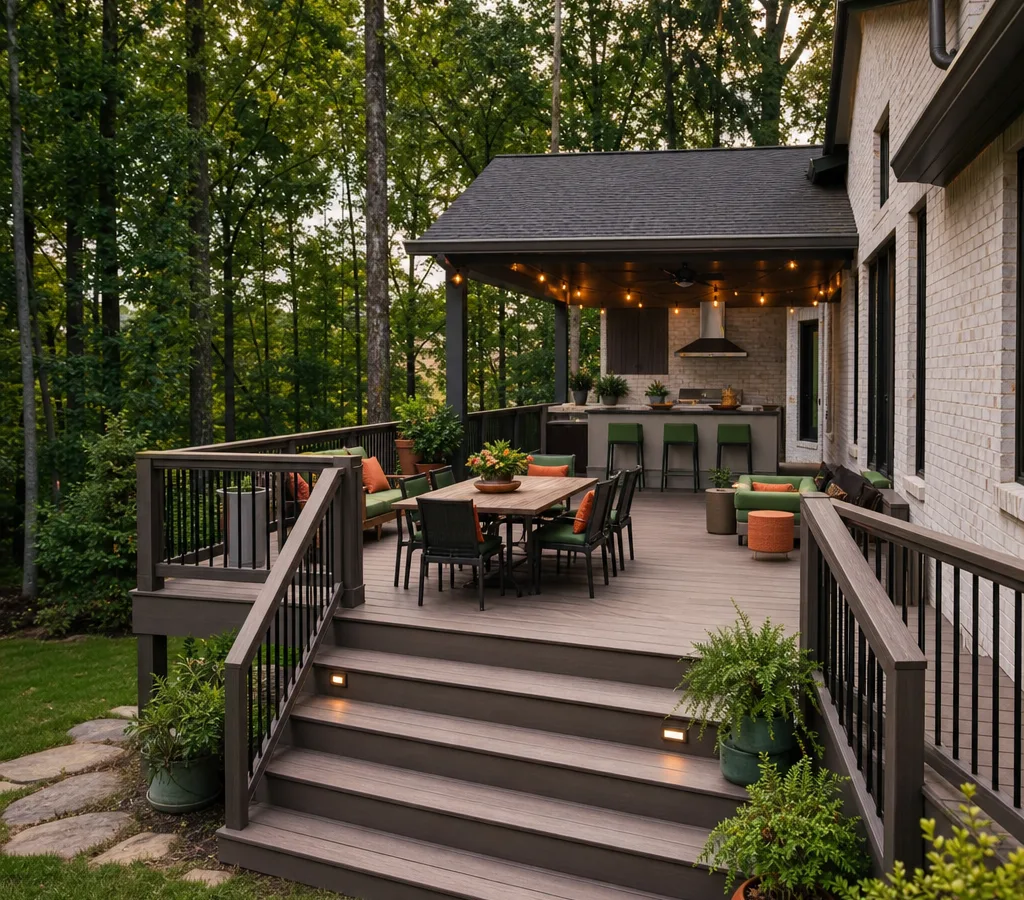
Low deck with dark railings, wide steps, and outdoor dining behind a brick house

Building intown

Old houses, narrow lots

The neighborhoods east of downtown hold some of the oldest housing in Atlanta. Inman Park was laid out in the late 1880s as the city's first garden suburb, Grant Park dates from 1882, and most of Virginia-Highland was built between 1909 and 1926 as a streetcar suburb of Craftsman bungalows. Morningside, Candler Park, Kirkwood, and East Atlanta share the pattern of older houses on modest lots.

For a deck, that means three things. The house is old, so the wall the deck attaches to has to be opened and checked. The lot is narrow, so the setbacks and the neighbor's fence are close. And access is often a side path a few feet wide, so every board is carried in by hand.

Several of these neighborhoods are also protected by the city, which adds a review before the building permit. This page covers what applies here, and it is what our team of Atlanta deck builders checks first on every intown job.

We also build in Reynoldstown and Ormewood Park near East Atlanta, and in Piedmont Heights, Lindbergh, and along Cheshire Bridge Road north of Morningside. All of them are inside the City of Atlanta, so the same permit rules apply. We build throughout the 30306, 30307, 30312, 30316, 30317, and 30324 zip codes.

Local factors

What shapes a deck in these neighborhoods

City-designated districts

Inman Park, Grant Park, Poncey-Highland, and Atkins Park are City of Atlanta Historic Districts, and Cabbagetown and Druid Hills are Landmark Districts. Exterior projects in them are reviewed by the city's historic preservation staff or the Atlanta Urban Design Commission.

National Register is different

Virginia-Highland as a whole is listed on the National Register of Historic Places, but only Atkins Park within it has a city historic overlay. A National Register listing alone does not add a city review, so the first step is to confirm exactly which district your address is in.

Trees on small lots

One large oak can shade three back yards here. The city requires a completed arborist meeting before a permit application that may affect trees can be submitted.

Access and neighbors

With houses a few feet apart, we plan deliveries and debris removal around shared driveways and tight side yards, and we keep stairs and landings inside the setbacks.

Permits

Permits and historic review

All of these neighborhoods are in the City of Atlanta, so the building permit comes from the Office of Buildings. Where a property is in a Historic or Landmark District, historic review comes first. What the city typically asks for:

  • A survey-based site plan with the deck, setbacks, and easements
  • Photos and drawings for historic review, where it applies
  • Tree locations, with the record of the arborist meeting
  • A framing plan and footing sizes
  • Ledger or free-standing details, guards, handrails, and stairs

The city strongly encourages applicants to meet with the neighborhood organization before a commission hearing. It is not required, but we recommend it.

Requirements change, so we check the current process with the city when we plan your deck.

Sources, checked October 2026: City of Atlanta historic preservation: homeowner resources; City of Atlanta Office of Buildings.

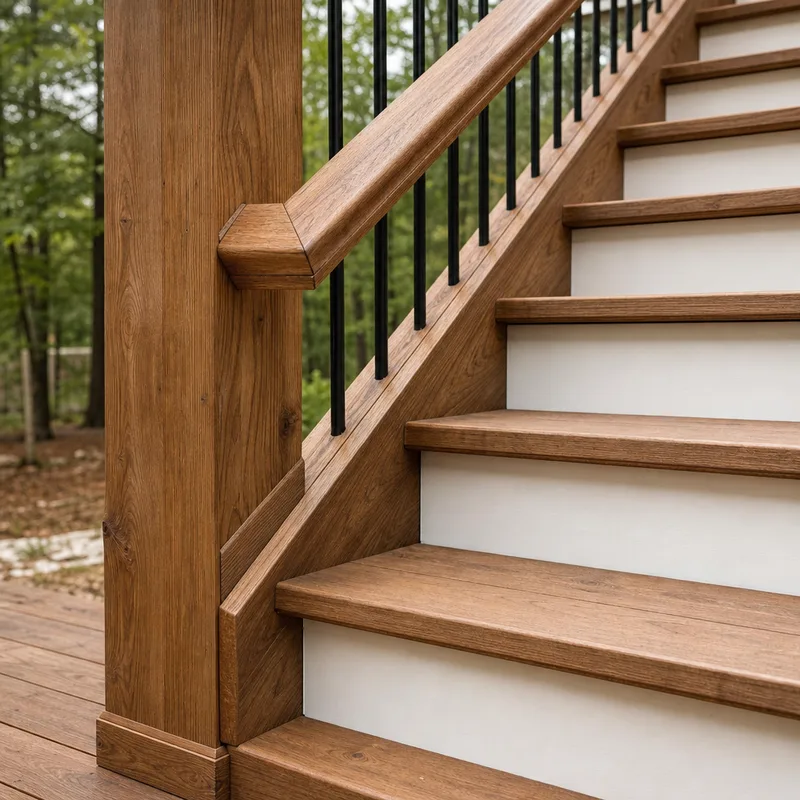
Close view of a wood stair handrail, newel post, and metal balusters

What fits here

Deck designs that suit intown houses

Most decks here are small and low: a landing outside the kitchen door that steps down to a patio or the yard. On a house with a crawlspace the deck sits only a few feet up, so airflow underneath and lumber rated for ground contact matter more than tall posts.

Simple wood railings suit a bungalow or a Victorian better than cable or glass, and in a city-designated district it is worth asking historic preservation staff which materials they will accept before ordering. Where the old band board cannot be verified, we build the deck free-standing beside the house.

In Inman Park, Grant Park, or Cabbagetown? Ask about historic review first.

Call (470) 279-4199

Common questions

Intown deck questions

Is my house in a city historic district?

It depends on the exact address. Inman Park, Grant Park, Poncey-Highland, and Atkins Park are City of Atlanta Historic Districts, and Cabbagetown and Druid Hills are Landmark Districts. Other neighborhoods here are listed on the National Register only, which does not add a city review. The city's historic preservation office can confirm your address.

Can a deck be built on a very narrow lot?

Usually. The deck has to stay inside the side and rear setbacks for your zoning district, which on a narrow lot can leave a modest footprint. Running the stairs along the house and keeping the deck close to the back wall makes the most of it.

Will you attach a deck to a hundred-year-old house?

Only after checking the wall. We open the siding where the ledger would go and look at the band board and framing. If they are sound, we flash and bolt the ledger. If they cannot be verified, the deck is built free-standing on its own posts.

How do materials get to a back yard with no driveway?

By hand, through the side yard or a rear gate, and debris leaves the same way. We look at access on the first visit because it affects both schedule and price.

Service area

Our East Atlanta service area

We build, replace, and repair decks throughout East Atlanta and the neighborhoods around it.

Start with your address

Plan a deck for your intown home

Tell us your address and the age of the house. We will confirm any historic district, check access and the house wall, and give you a written scope.