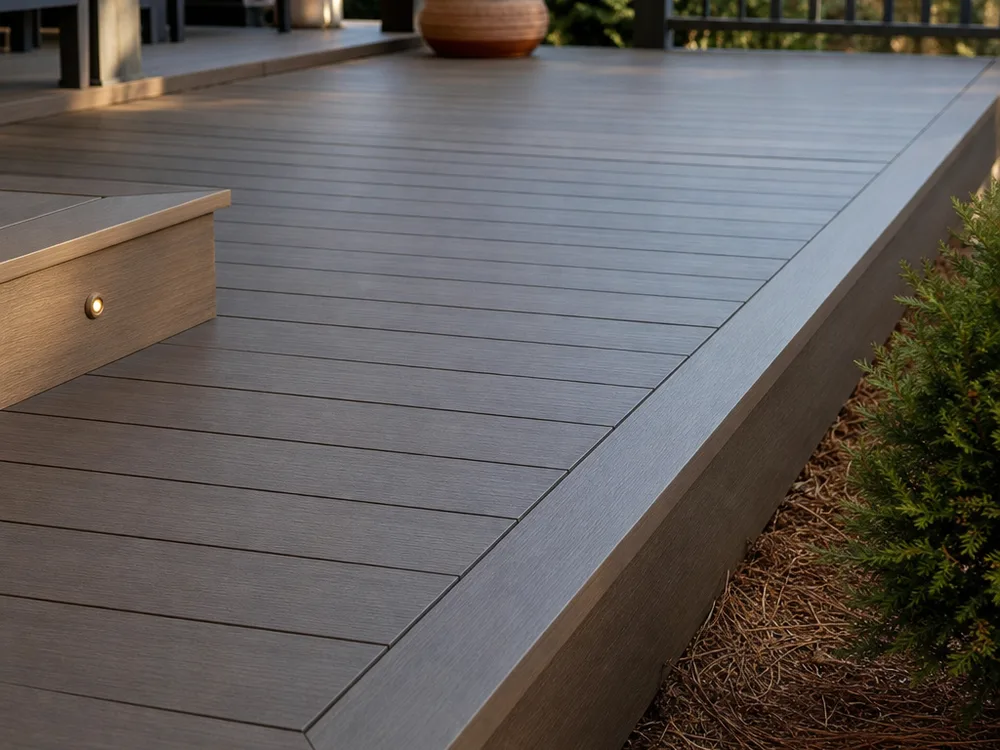
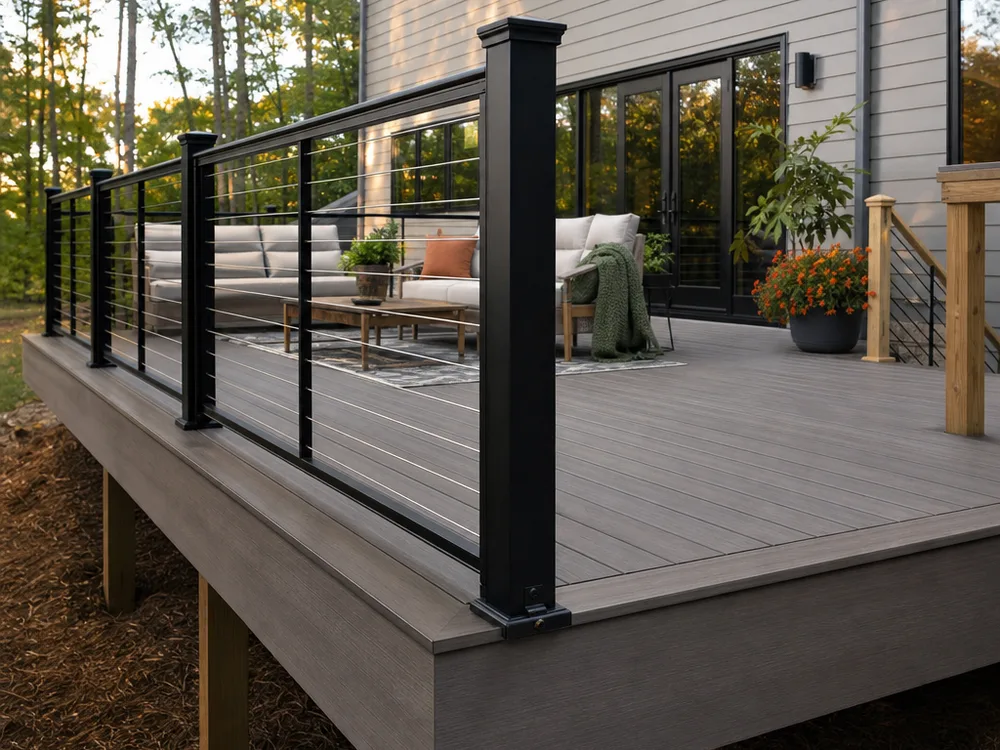
Composite decking is a surface product. The boards you walk on are made from a blend of wood fiber and plastic, or from PVC with no wood at all, and most current lines wrap the core in a protective cap that resists stains and fading. Under those boards, the frame is still pressure-treated lumber: posts, beams, joists, and a ledger at the house. A composite deck needs the same structural care as a wood one.
What changes is the upkeep. There is no sanding, staining, or sealing. An occasional wash with soap and water handles pollen, leaves, and the mildew film that shaded Atlanta yards tend to grow. In exchange, the boards cost more up front, expand and contract along their length as the temperature changes, and can run hot under bare feet in full afternoon sun, especially in darker colors.
We help you weigh that trade plainly. If your deck sits in deep shade under hardwoods, low maintenance may matter most. If it faces west with no cover, color and board type matter more than brand. As local deck contractors, we build in both wood and composite, so the recommendation follows your yard.